
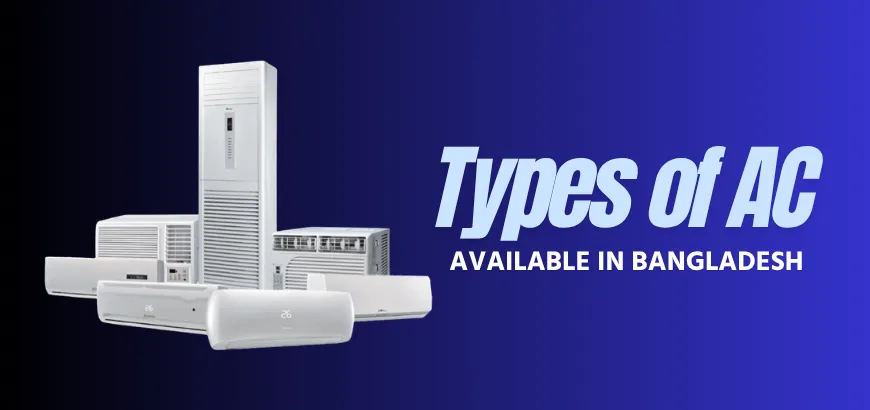
When the summer heat in Bangladesh becomes unbearable, an air conditioner (AC) can be a lifesaver. The high temperatures and humidity levels can make daily life uncomfortable, and having a reliable AC can provide much-needed relief. Whether you're at home, in the office, or even in a shop or restaurant, choosing the right AC is crucial not only for your comfort but also for saving on energy costs. With a wide variety of AC types and brands available in the Bangladeshi market.
It can be exceptional to figure out which one best suits your specific needs. This guide will help simplify the process by breaking down the different AC types, energy efficiencies, appropriate sizes for various spaces, and popular brands available in Bangladesh. Also, our complete AC buying guide is here for you. By the end, you’ll be equipped with the knowledge to make an informed decision that suits both your cooling needs and your budget.
Table of Contents
- Types of Air Conditioners in Bangladesh
- Split AC
- Window AC
- Portable AC
- Cassette AC
- Floor-Standing AC
- Ceiling-Type AC
- Energy Efficiency of Air Conditioners in Bangladesh
- Inverter AC
- Non-Inverter AC
- AC Sizing Guide for Bangladesh
Types of Air Conditioners in Bangladesh
In Bangladesh, the variety of air conditioners available provides for different cooling needs, from compact units for small rooms to powerful systems for larger spaces. Whether you're looking for efficiency, budget options, or advanced features, there's a suitable AC type for everyone.
Split AC
Split ACs are among the most popular choices for homes and offices in Bangladesh. These units consist of two parts: an indoor unit and an outdoor unit, which are connected by copper pipes. The outdoor unit contains the compressor, while the indoor unit contains the evaporator. This system offers quiet operation and efficient cooling. Split ACs are available in different capacities, making them versatile for various room sizes.
Pros of Split AC
Quiet operation: The compressor is located outside, so there’s less noise inside.
Efficient cooling: Offers quick and uniform cooling.
Aesthetic appeal: The indoor unit is sleek and modern, blending well with the room decor.
Cons of Split AC
Professional installation is required, which involves complex wall drilling and mounting.
Window AC
Window ACs are compact, single-unit systems designed to be installed in a window or a hole in the wall. They are a more budget-friendly option compared to split ACs, making them a popular choice for people looking for an affordable cooling solution. However, one downside of window ACs is that they tend to be noisier since all the components, such as the compressor, condenser, and evaporator, are housed in a single unit, which can be heard during operation.
Pros of Window AC
Cost-effective: Lower initial cost compared to split ACs.
Simple installation: Easy to install, ideal for renters or those who need temporary cooling solutions.
Cons of Window AC
These units naturally block your window view and reduce available natural light.
Portable AC
Portable air conditioners are compact, lightweight units designed for easy mobility, allowing them to be rolled from one room to another with minimal effort. This makes them an excellent choice for spaces where permanent installation is not an option, such as rented apartments, dorms, or temporary living situations. One of the main challenges with portable ACs is that they require an exhaust hose to vent warm air outside, which can make them less efficient compared to split or window models. Despite this, they are still a flexible and affordable option for cooling small to medium-sized spaces.
Pros of Portable AC
Mobility: Easy to move between rooms.
No permanent installation: Great for renters or temporary setups.
Cons of Portable AC
They occupy valuable floor space and require an external exhaust vent hose.
Cassette AC
Cassette air conditioners are ceiling-mounted units, commonly found in large commercial spaces such as restaurants, shopping malls, offices, and conference halls. They are designed to distribute cool air in four directions, ensuring uniform cooling across a wide area. This feature makes them ideal for larger spaces with high foot traffic. One of the key benefits of cassette ACs is that they are installed in the ceiling, making them less noticeable and allowing for more floor space. Their discreet installation and efficient cooling make them a popular choice for commercial environments where aesthetics and functionality are both important.
Pros of Cassette AC
Wide coverage: Cool air is distributed evenly across the room.
Discreet installation: Ideal for large rooms or offices with limited wall space.
Cons of Cassette AC
Installation is only possible if your room has a functional false ceiling.
Floor-Standing AC
Floor-standing air conditioners are tall, vertical units that sit directly on the floor, offering a sleek and space-saving design. These units are known for their high cooling capacity, making them ideal for larger open spaces such as showrooms, offices, or spacious living rooms. They are especially popular for those who need powerful and efficient cooling without taking up too much room. With their ability to cool large areas effectively, floor-standing ACs are perfect for places where wall-mounted systems might not be feasible. Their compact yet powerful design makes them a versatile solution for various spaces.
Pros of Floor-Standing AC
High cooling capacity: Effective for larger spaces.
Easy installation: No need for wall mounting.
Cons of Floor-Standing AC
Furniture or people standing nearby can easily block the direct cooling airflow.
Ceiling-Type AC
Similar to cassette ACs, ceiling-type air conditioners are mounted directly on the ceiling and are typically used in larger spaces such as halls, auditoriums, conference rooms, or large office areas. These units provide uniform cooling by equally distributing air across the room, making them ideal for spaces that require consistent temperature control. Ceiling-type ACs are especially beneficial in environments where wall space is limited or aesthetics are a concern. They help maintain a comfortable atmosphere without taking up valuable floor or wall space. Their discreet installation and efficient cooling make them a preferred option for large, open areas.
Pros of Ceiling-Type AC
Large area coverage: Ideal for cooling large spaces.
Stealthy installation: Mounted on the ceiling, so they don’t take up any floor space.
Cons of Ceiling-Type AC
Their high placement makes routine filter cleaning and maintenance slightly more difficult.
Energy Efficiency of Air Conditioners in Bangladesh
When purchasing an AC, energy efficiency is an important factor to consider, especially in a country like Bangladesh, where the demand for cooling systems is high during the summer months. Here are two common types of AC technologies available in the market:
Inverter AC
Inverter ACs are equipped with a variable-speed compressor that adjusts its speed based on the temperature requirement, allowing for more precise control of the cooling process. Unlike traditional non-inverter models, which operate at a fixed speed, inverter ACs constantly adapt to the room’s cooling needs, resulting in lower energy consumption. This not only improves efficiency but also provides more consistent temperature control. With an inverter AC, you can save up to 60% on electricity bills compared to non-inverter models, making them a more cost-effective and eco-friendly choice in the long run.
Benefits of Inverter AC
Energy-saving: Efficient in terms of power consumption.
Maintains consistent temperature: No sudden cooling or heating cycles.
Longer lifespan: Reduced wear and tear on the compressor.
Non-Inverter AC
Non-inverter ACs are equipped with a fixed-speed compressor that operates at full capacity until the room reaches the desired temperature. Once the set temperature is achieved, the compressor shuts off, only to restart when the temperature rises again. While non-inverter ACs are more affordable to buy initially, they tend to consume more electricity because the compressor frequently starts and stops, which requires additional energy. This constant cycle of turning on and off can lead to higher energy bills over time compared to inverter models, making them less efficient in the long run.
Benefits of Non-Inverter AC
Lower upfront cost: More affordable than inverter ACs.
Simplicity: Easy to use without complex settings.
AC Sizing Guide for Bangladesh
One of the most common questions people ask when purchasing an AC is, How many tons do I need? The correct tonnage is essential for efficient cooling. Choosing the right size ensures that your AC works efficiently and saves on energy costs. Here’s a simple guide:
1 Ton: Suitable for rooms up to 120–150 sq. ft.
1.5 Ton: Ideal for rooms ranging from 150–200 sq. ft.
2 Ton: Best for rooms larger than 200 sq. ft.
Note: For optimal cooling, it's important to factor in factors like the number of windows, sunlight exposure, and the number of occupants.
Conclusion
Finding the perfect air conditioner for your home or office in Bangladesh is crucial for a comfortable environment, lower energy bills, and efficient cooling. Whether you need a split AC, a window AC, or a portable AC, there are plenty of choices available. Choosing an energy-efficient inverter AC will also save you money in the long term. For a wide range of reliable air conditioners from renowned local and global brands, visit Star Tech today. By assessing your room size, budget, and cooling needs, Star Tech ensures you invest in an air conditioner that delivers optimal performance and lasting value.
Frequently Asked Questions (FAQS)
What is the best type of AC for home use?
The most popular types for homes are split ACs and inverter ACs. Split ACs offer efficient cooling, while inverter models are more energy-efficient.
How do I know what size AC I need?
Choose 1 ton for rooms up to 150 sq. ft., 1.5 tons for rooms up to 200 sq. ft., and 2 tons for larger rooms.
What’s the difference between an inverter and a non-inverter AC?
Inverter ACs adjust their compressor speed to maintain consistent temperatures, saving energy, while non-inverter ACs use a fixed-speed compressor.
Are portable ACs effective for cooling large rooms?
Portable ACs are suitable for small to medium-sized rooms. They are less efficient for large spaces.
How much can an inverter AC save on electricity bills?
Inverter ACs can save up to 60% on electricity bills compared to non-inverter models.
How long do air conditioners typically last?
On average, air conditioners last about 10-15 years with proper maintenance.

Comments
There are no comments for this Article.