
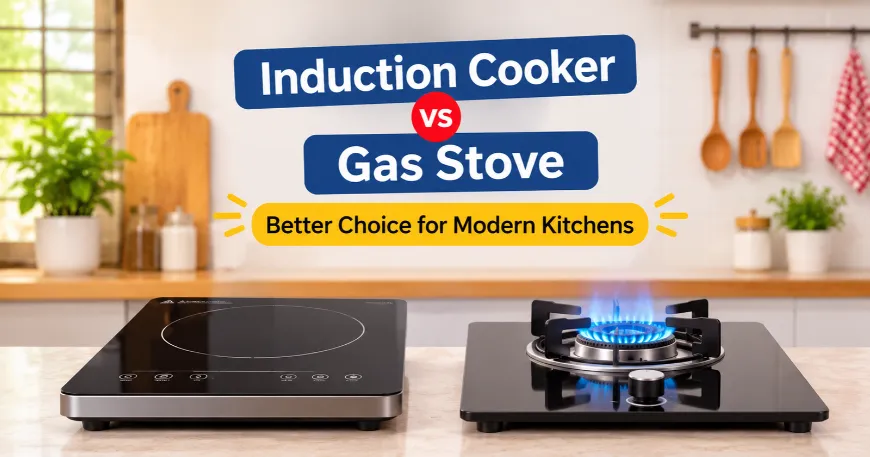
In recent years, Bangladesh has been facing a growing natural gas and LPG crisis, particularly in major cities and residential areas. Many households are experiencing long waiting periods for natural gas supply, frequent pressure drops during cooking time, and overpriced LPG cylinder costs. These situations are making everyday cooking stressful, time-consuming, and less reliable for families. Due to these challenges, people are increasingly looking for safer and more cost-effective cooking alternatives.
Electric cooking solutions in Bangladesh, especially induction-based cooking, are gaining attention as urban and semi-urban households start leaning toward modern kitchen appliances amid changing energy conditions.
Table of Contents
- Gas Crisis in Bangladesh: A Daily Kitchen Challenge
- What is Induction-Based Cooking?
- How Induction Cooking Works
- Why Electric Cooking is Gaining Popularity in Bangladesh
- Induction Cooking vs. Gas Stove: A Practical Comparison
- Is Electric Cooking a Cost-Efficient Choice?
- Who is Accepting Electric Cooking Solutions?
- The Future of Home Cooking in Bangladesh
- Conclusion
Gas Crisis in Bangladesh: A Daily Kitchen Challenge
The LPG gas crisis in Bangladesh has become a long-term issue rather than a temporary inconvenience. Limited new gas connections, inconsistent gas pressure, and rising reliance on LPG cylinders have made traditional stoves difficult to use. Safety concerns, such as gas leaks, fire risks, and indoor air pollution, are also common concerns among Bangladeshi people.
In some areas in Bangladesh, the pipeline gas is available only at midnight. So this has become a routine struggle for middle-class and urban families who cannot afford an LPG cylinder for their daily cooking. These ongoing challenges are encouraging households to explore energy-efficient kitchen appliances and electric cooking options that are not dependent on gas supply and offer a more stable daily cooking experience.
What is Induction-Based Cooking?
Induction-based cooking is a modern electric induction cooker technology that uses electromagnetic energy to heat cookware directly. Unlike gas stoves or conventional electric heaters, this cooktop does not rely on open flames or exposed heating elements. As a result, the surrounding cooking surface remains comparatively cool, which improves safety in the kitchen.
Because heat is generated directly in the cookware, induction cooking can minimise your energy loss and help you prepare meals faster. These characteristics make induction-based cooking particularly suitable for apartments and homes where gas access is limited or, in some cases, not available. For this reason, the induction cooker in Bangladesh is increasingly seen as a reliable and modern cooking approach rather than just a backup appliance.
How Induction Cooking Works
Induction cooking works through electromagnetic induction. Electricity passes through a copper coil inside the cooktop, which creates a magnetic field. When compatible cookware is placed on the surface, the magnetic field directly generates heat inside the cookware.
Since heat is produced only where it is needed, energy-efficient cooking becomes possible with minimal waste. There is no open flame, no combustion, and no unnecessary heat loss. So, an induction cooker is one of the safest cooking appliances available for everyday household use.
Why Electric Cooking is Gaining Popularity in Bangladesh
Electric cooking methods, including induction-based cooking, are becoming increasingly popular due to several lifestyle and practical benefits. For instance, they do not require gas connections. So no more worry about uncertain fuel supplies caused by the ongoing gas crisis. Cooking becomes faster and more consistent, which significantly saves families time.
In addition, the smooth cooking surface is easy to clean, as spills do not burn onto the surface. The absence of flames and gas emissions also improves indoor air quality and makes electric cooking safer for households with children and elderly members. So these advantages align well with the needs of modern urban living and explain why many households now consider induction stoves for home use as part of their everyday kitchen setup.
Induction Cooking vs. Gas Stove: A Practical Comparison
| Feature | Induction Cooker | Gas Stove |
|---|---|---|
| Fuel Type | Electricity | Natural Gas / LPG |
| Safety | Very High | Medium (Fire Risk) |
| Cooking Speed | Fast | Medium |
| Monthly Cost | Lower | Lower |
| Maintenance | Easy | Difficult |
| Heat Loss | Very Low | High |
| Gas Crisis Impact | No Problem | Major Problem |
Is Electric Cooking a Cost-Efficient Choice?
Many households worry about electricity usage, but electric cooking methods are designed to be more energy-efficient than gas stoves. Since heat is generated directly in the cookware in both induction and infrared cooktops, less energy is wasted compared to traditional cooking methods. Over time, this efficiency helps balance household energy consumption.
While people often search online for terms like induction cooker price in Bangladesh or the best induction cooker, the long-term value of induction-based cooking lies in its efficiency, safety, and reduced dependence on LPG refills. For many families, the stability and predictability of electric cooking make it an effective long-term option rather than a short-term alternative.
Who is Accepting Electric Cooking Solutions?
A wide range of users across Bangladesh are adopting electric cooking. Apartment residents without gas connections, students, working professionals, and small families are increasingly relying on electric cooking for preparing daily meals. Office pantries and compact home kitchens also benefit from the clean and space-saving nature of modern electric kitchen appliances.
As urban lifestyles evolve, induction-based cooking fits well with limited space, safety concerns, and the need for convenience in everyday routines. This growing adoption reflects a broader shift toward energy-efficient and safe cooking practices.
TIP: Read our dedicated blog on induction cooker vs. infrared cooker comparison for more detailed insights if you have decided to move forward with an electric cooking method.
The Future of Home Cooking in Bangladesh
Bangladesh is gradually shifting toward different energy solutions, with electricity playing a more significant role in daily life. As infrastructure improves and smart kitchen appliances become more common, induction-based cooking is expected to become a standard part of modern kitchens. By reducing dependence on gas and supporting cleaner energy use, induction cooking aligns with sustainable living goals.
At Star Tech, you can explore not only high-quality induction and infrared cookers in Bangladesh but also a wide range of modern home appliances that make everyday cooking safer, more efficient, and eco-friendly. This approach ultimately sets induction cooking as a key part of the future home kitchen in Bangladesh.
Conclusion
As we all are facing the ongoing gas crisis in Bangladesh, it has highlighted the limitations of traditional cooking methods and increased demand for reliable gas-alternative cooking solutions. In response, many households are rethinking how they cook and are exploring electric cooktops that provide stability, safety, and efficiency.
Induction-based electric cooking represents a sensible shift toward a cleaner and more reliable kitchen environment. As energy challenges continue, electric cooking is set to play an increasingly important role in modern Bangladeshi homes.
Frequently Asked Questions (FAQS)
Why are induction cookers popular in Bangladesh now?
Due to rising LPG prices and gas shortages, induction cookers offer fast, safe, and cost-effective cooking for modern Bangladeshi households.
Can induction cookers cook traditional Bangladeshi dishes?
Yes, induction cookers efficiently prepare rice, dal, curry, bharta, and stir-fried dishes, often with preset cooking modes for convenience.
Why should I switch to an induction cooker now?
With gas shortages and rising LPG costs, induction cookers provide a safe, fast, energy-saving, and modern alternative for Bangladeshi kitchens.
Are induction cookers safe for children?
Yes, induction cookers have no open flames, feature auto shut-off, and reduce burn risks. Induction cookers are safe for children for households with children.
Do induction cookers increase electricity bills significantly?
No. Given the current Bangladeshi fuel scenario, induction cookers are energy-efficient, which consumes less electricity than traditional infrared electric cooktops and often costing less than liquefied petroleum gas (LPG) for cooking, depending on cooking habits.
How long do induction cookers last?
With proper use and maintenance, induction cookers can last 5–10 years. Premium branded cooktops like Philips or BOSCH offer reliable, fast, and safe cooking models for long-term household needs.

Comments
There are no comments for this Article.