
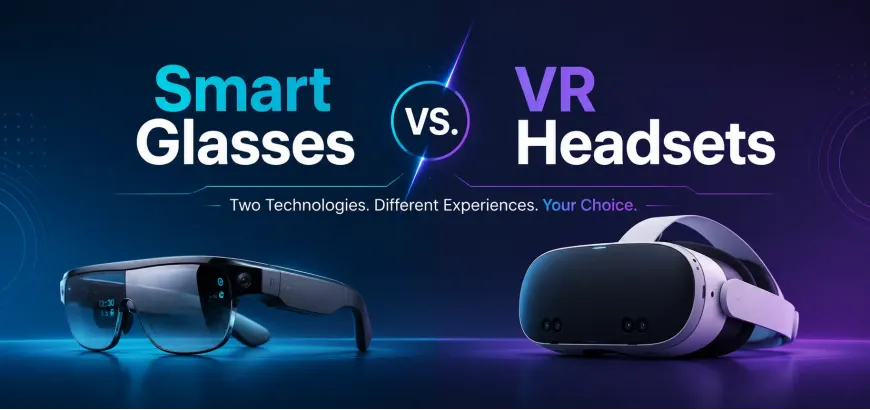
Smart glasses show digital info in front of your eyes while keeping the real world in view. VR headsets do the opposite. They block outside sights and place you inside a virtual space. Basically, this key difference shapes how each wearable gadget uses your eyes, ears, and face to deliver extended reality. In the future, XR devices will change how we work, play, and learn.
Many users now compare features, comfort, and daily use before picking one. Star Tech’s smart glasses vs VR headsets blog aims to guide you through the basics and help you understand each device better. Our guide will also explain how each gadget immerses you in digital content in its own way. So before going in-depth, we can start with how both of them work and what makes each option useful.
Table of Contents
- How Smart Glasses Work
- How Virtual Reality (VR) Headsets Work
- Best Choice Based on Different Use Cases
- Smart Glasses vs VR Headsets by Other Standards
- Bonus Section: Smart Glasses vs AR Device vs VR Headset
- VR Glasses or Smart Glasses; Your Suitable Pick
How Smart Glasses Work
The beginning of a smart glasses comparison starts with how these glasses show digital info in front of your eyes. They use small displays, cameras, microphones, and sensors to handle everyday tasks without connecting to a smartphone. And you will be surprised to know that the new models like Meta Ray-Ban Display also added voice control and wrist input. So, you can make quick checks, calls, and alerts while you stay aware of the world around you.
How Virtual Reality (VR) Headsets Work
VR headsets work in a different way, which is why a VR headset comparison starts with immersion. They place a large screen right in front of your eyes and move you into a digital environment. Devices like Apple Vision Pro and Meta Quest Pro support screen mirroring, mixed reality, and all-in-one VR headset use. That setup completely suits gaming, media, and focused work inside a private virtual space.
Note: You might have heard about VR glasses. They are a type of VR headset but not the same as VR headsets. They are usually lighter and more compact. Whereas VR headsets are bulkier and built for full immersion.
Best Choice Based on Different Use Cases
Smart glasses and VR headsets now suit different user needs in Bangladesh. The main difference between smart glasses and VR headset use is simple: smart glasses fit short daily tasks around the real world, while VR headsets suit deep, fully immersive sessions for games, media, and focused work in a private digital space.
Gaming & Recreation
For pure fun, VR wins for most gamers in Bangladesh. VR headset vs smart glasses feels one-sided here because titles for Meta Quest Pro, PlayStation VR2, and Apple Vision Pro seem more intense and immersive. Note that smart glasses work better only as companion gadgets for quick notifications or guides during play, not as the main gaming screen, especially when you already game on PC.
Media Consumption
People who mainly watch movies, sports, and shows usually prefer VR. A smart glasses vs virtual reality headset comparison for streaming often places VR ahead, because it can give a huge virtual screen and surround sound for watching movies or streaming videos. Smart glasses stay useful when you want to watch short clips or scroll content while moving around the house or city and browsing social media.
Video Editing
For video editors and content creators, smart glasses can support light review and notes. But the real editing still happens on a laptop or desktop. You might use smart glasses to view comments or timelines while a main screen stays clear when using with a laptop.
VR editing tools exist, yet they still feel niche for most Bangladeshi users who need accurate color and fine control.
Video Recording
Here, smart glasses challenging your smartphone becomes interesting for hands-free clips. Some models can capture point-of-view videos while you stay active. That helps vloggers and tech enthusiasts who record daily life or travel. On the contrary, VR headsets rarely record the outside world. They serve better for capturing in-game footage or virtual experiences instead. This suits many students who stream gameplay.
Interactive Learning
University students often ask which is better, a VR headset or smart glasses for study. Smart glasses suit quick translations, note prompts, and overlays during field visits or labs. This helps students and teachers in real classrooms. VR headsets shine for history walks, science demos, online classes, and 3D labs where you need to step inside a model. Both choices are good, but VR usually gives a stronger effect when the lesson needs full immersion.
Fitness Purpose
For fitness, VR headsets can turn workouts into games that feel more fun. Boxing, dance, and rhythm apps keep you moving with live feedback and scores in guided training sessions. Smart glasses help more with outdoor runs or rides, showing pace, maps, and heart rate while you stay aware of traffic. Both support health goals, yet VR suits indoor sessions while smart glasses match urban outdoor routines.
Productivity Work
In productivity work, office users, software developers, and remote staff still rely on laptops they can connect to a computer or big monitor. Smart glasses can show quick alerts, task lists, and calendar notes while you type, so they feel lighter for daily productivity and even basic programming. VR headsets can create huge virtual desktops, but some people in Bangladesh find long sessions tiring for regular office work.
Simulations & Training
For simulations & training, VR headsets lead by a wide gap. Aviation drills, medical practice, and industrial safety walkthroughs use detailed 3D spaces that smart glasses cannot match yet. Smart glasses still help with step-by-step overlays on real equipment or during live presentation sessions or virtual meetings. That mix lets teams pick the best smart glasses vs VR headsets for gaming-like practice and serious skill building.
Smart Glasses vs VR Headsets by Other Standards
Smart glasses and VR headsets fit different needs, so whether smart glasses are better than VR headsets for you depends on your situation.
Device Compatibility
Smart glasses usually work well with phones and can connect to a laptop for more content. However, VR headsets also support more complex apps, but they often need more setup. When comparing smart glasses and VR headsets, glasses feel simpler for daily use.
Environmental Awareness
Smart glasses keep the real world visible, so they are better for walking or light outdoor use. On the other hand, VR headsets block outside views and suit private spaces. In smart glasses vs virtual reality headsets, glasses win on awareness.
Daily Usability (Wearing Comfort)
Smart glasses are often more comfortable for long use and cause less eye strain. They also create less motion sickness for many users. You might be wondering, do glasses make a difference in VR? Yes, lens inserts can improve comfort and clarity.
Weather Consideration
Smart glasses work better for short outdoor use, while VR headsets are best indoors. When you compare smart glasses or VR headsets for different weather, glasses are the easier pick.
Maintenance
Smart glasses need light cleaning and charging. VR headsets need more care because sweat and dust build up faster. That is why many people find smart glasses easier to manage than VR headsets.
Portability
Surely, when choosing between smart glasses and VR headsets, glasses win on portability. Because smart glasses are easier to carry while traveling, as they take less space. Whereas VR headsets need more room and accessories.
Smart Glasses Limits
However, smart glasses still have limits. Their small displays can show only short bits of text, alerts, and simple visuals. Battery life can drop fast during heavy use. Some models also need a phone or online service for full functionality. That can make them less useful for long work sessions or rich media. Comfort can vary too, since the frame must fit well on the face.
VR Headsets Limits
Like smart glasses, VR headsets also face clear limits. They cover the eyes and block the outside world. So long sessions can feel tiring. Meanwhile, many users notice heat, weight, or pressure on the face after a while. Setup can take more time, and some apps need strong hardware or a big play area. These issues make VR better for short, focused use than all-day wear.
Bonus Section: Smart Glasses vs AR Device vs VR Headset
After knowing all the differences between smart glasses and VR headsets, it is also important to know about one more popular extended reality device, which is an AR glasses. An AR device adds digital objects to the real world, while smart glasses keep things light and task-focused, and VR headsets build a full virtual space.
In augmented reality glasses vs VR headset comparisons, AR devices usually sit between smart glasses and VR headsets. They show useful overlays for maps, work help, and learning, but they do not block the real world like VR. Smart glasses are simpler and more casual, while VR headsets deliver the deepest immersion for games, media, and training.
VR Glasses or Smart Glasses; Your Suitable Pick
As we are about to wrap up this blog, the main point is simple: whether you should buy smart glasses or a VR headset depends on how you plan to use it. A smart glass suits quick daily tasks, while Virtual reality device works better for full immersion in games, learning, and media. Together, they show how extended reality is shaping the next stage of personal tech.
Augmented Reality (AR) fits between the two, which we have briefly covered in this article. If you want to explore these models in one place, Star Tech online shop, Bangladesh’s one-stop gadget shop, is a smart place to check the latest smart glasses and VR headsets mentioned in this blog.
Frequently Asked Questions (FAQs)
Which device offers better value for money in Bangladesh, smart glasses or VR headsets?
Smart glasses usually give better value for money for daily use and light work. VR headsets are better if you want gaming, movies, and full immersion. The best choice eventually depends on how you plan to use them.
Can I use smart glasses as a virtual display for my laptop while working?
Yes, some smart glasses can act as a virtual display for laptop work. They are useful for simple viewing, notes, and portable use. However, they can not replace a full monitor for heavy work.
Which hardware setup gives a better movie theater experience at home?
A VR headset gives the stronger home theater experience. Because it shows a large virtual screen and blocks outside distractions. Smart glasses are good for casual viewing, but they feel less immersive.
Can smart glasses replace a VR headset?
No, smart glasses cannot fully replace a VR headset. They are better for quick alerts, overlays, and real-world use. VR headsets are better for deep immersion and 3D experiences.
Which local Bangladesh shops sell official VR gear and smart glasses?
Star Tech sells original VR gadgets and smart glasses from all the popular brands. It is a good place in Bangladesh to compare models side-by-side and buy official products.

Comments
There are no comments for this Article.